Classics


 |
 |
 |
 |
 |
 |
 |
 |
 |
 |
Question:
Question:
Question:
Question:


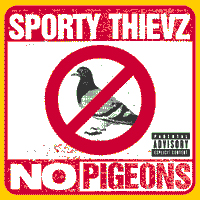
No Pigeons
Hip-Hop History 101: From the Bronx to a Global Genre
 |
|
| Preview | |

written by: KingKirk Sporty
| Preview | |
More Articles...
Hip hop began in the Bronx, New York City, in the early 1970s, when DJs at block parties and community events isolated the rhythmic breaks of funk and soul records and invited people to dance and speak over them. Within a decade it had produced the first commercial rap records. Within fifty years it had become a worldwide culture of music, dance, art and fashion.
This overview follows the main stages in order, with names and dates that are well documented in standard histories. It is an introduction, not a full account, and sources sometimes differ on details.
The Bronx in the early 1970s
The Bronx in that period faced economic hardship, housing loss and reduced public spending, and young people often made their own entertainment. Block parties with sound systems were a central part of neighborhood life.
A party held on 11 August 1973 at a building on Sedgwick Avenue, hosted by Cindy Campbell and played by her brother DJ Kool Herc (Clive Campbell), is widely cited as the founding moment of hip hop. The date is symbolic: similar parties were happening elsewhere, but Herc’s technique of extending the instrumental break by switching between two copies of the same record became an influential template.
The four elements
Hip hop culture is usually described through four elements:
- DJing: playing and manipulating records, including scratching and blending, which Grandmaster Flash and others developed.
- MCing (rapping): rhythmic speech over a beat, which grew from the DJ’s party announcements and call-and-response into complex lyrical writing.
- Breaking: the dance form, performed by b-boys and b-girls.
- Graffiti writing: the visual art, practiced on walls and subway cars.
Some writers add a fifth element, knowledge or awareness. Afrika Bambaataa, who helped organize the Universal Zulu Nation, is often credited with promoting the idea of hip hop as a culture and not only a music style.
The first records, 1979 to the mid-1980s
For several years hip hop existed mainly in live performance and on cassette recordings of parties. The Sugarhill Gang’s “Rapper’s Delight” (1979) is the record that brought rap to the wider public; it is widely described as the first rap single to reach the Billboard top 40. Grandmaster Flash and the Furious Five’s “The Message” (1982) is remembered for turning the genre toward social commentary.
By the mid-1980s, Run-DMC from Hollis, Queens, had brought a harder sound and a rock crossover; their collaboration with Aerosmith on “Walk This Way” (1986) brought the genre to a large mainstream audience. Early answer records also arose in this period, such as “Roxanne’s Revenge” (1984), a reply to UTFO’s “Roxanne, Roxanne”. That tradition of the response track continues; the page on an answer record to a 1990s hit is one example from a later decade.
The golden age
The late 1980s and early 1990s are often called the golden age. Producers used samplers to build dense, layered beats, and artists such as Public Enemy, Eric B. & Rakim, De La Soul and A Tribe Called Quest widened the genre’s sound and subject matter. In 1989, the Grammy Awards introduced a rap category, a sign of institutional recognition, though the first ceremony in that category was criticized by some artists at the time.
Regional scenes and the 1990s
As the genre grew, strong local scenes developed.
- West Coast: N.W.A’s “Straight Outta Compton” (1988) and Dr. Dre’s “The Chronic” (1992) helped define gangsta rap and the G-funk sound.
- East Coast: Nas’s “Illmatic” (1994) and The Notorious B.I.G.’s “Ready to Die” (1994) are commonly cited as landmarks of New York lyricism.
- The South: Atlanta’s OutKast, and Houston, Memphis and New Orleans artists built distinctive local sounds, and Southern hip hop later became a dominant commercial force.
Tensions between regional scenes sometimes dominated media coverage in the mid-1990s, but the music itself traveled and blended.
Independent and global growth
From the 1990s onward, independent labels, mixtapes and, later, the internet gave artists new ways to release music without a major label. Local scenes sprang up in the United Kingdom, France, Germany, Japan, Brazil, Nigeria, South Korea and many other places, with artists rapping in their own languages and drawing on local traditions. The history of a single act, like the hip hop group profile on this site, reflects that broader independent culture, though it is only one small story.
Technology and the shape of the music
Equipment shaped the sound at each stage. Turntables and mixers defined the early DJ era; drum machines such as the Roland TR-808, released in 1980, gave many 1980s records their bass and rhythm; samplers allowed producers to build tracks from fragments of older records; and later, affordable computers and software brought studio-quality production into bedrooms. Each change widened who could make records, which helps explain how the genre spread so quickly and why independent releases matter so much to its story.
Why it matters today
Hip hop is now one of the most widely listened-to genres in the world, and its techniques, from sampling to the structure of verses and hooks, appear in pop, rock and electronic music. Institutions including the Smithsonian’s National Museum of African American History and Culture hold collections related to its history. For a basic reference, see the Wikipedia article on hip hop, and for the craft side of the culture, see the home page of this site.
Frequently asked questions
Where and when did hip hop start?
It started in the Bronx in the early 1970s. A party on 11 August 1973 hosted by DJ Kool Herc is the date most often cited, though the culture developed over several years.
What are the four elements of hip hop?
DJing, MCing (rapping), breaking (dance) and graffiti writing. Some add knowledge as a fifth.
What was the first rap record?
It depends on how you define the term. “Rapper’s Delight” (1979) is widely regarded as the first rap hit, but other rap-style records appeared around the same time.
Is hip hop the same as rap?
Not exactly. Rap is the vocal style; hip hop is the broader culture that includes DJing, dance and art.